

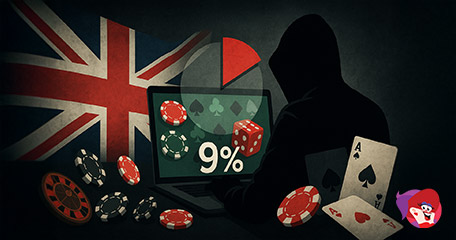
A new report from Yield Sec reveals that Britain’s illegal gambling market now accounts for 9% of total online gambling, generating £379 million in revenue during the first half of 2025. The findings, presented at a Peers for Gambling Reform event, show an industry that has expanded dramatically since 2020, when it made up just 0.43% of the market.
Yield Sec CEO Ismail Vali described the trend as doubling nearly every year since the pandemic, explaining that growth has been driven not by mainstream players but by “exploitation of vulnerable groups.” The report notes around 700 unlicensed operators supported by more than 1,600 affiliates, running in parallel with a regulated market of over 2,000 licensed brands producing £3.9 billion in revenue and promoted by nearly 7,000 affiliates.
Much of the expansion has been linked to the rise of “not on Gamstop” operators, which specifically target individuals enrolled in the UK’s national self-exclusion scheme. Vali said: “So of 100% of stuff that you see promoting illegal gambling, 84% is not-on-Gamstop related. Not-on-Gamstop was a problem that started in 2020, we’ve said something about it every single year. And every single year, this thing doubles the size of the UK’s illegal gambling sector. This is an area where that phenomenon simply has not been killed.”
Focus on Self-Excluded and Underage Players
The Yield Sec analysis estimated that Gamstop users alone could represent £426 million in losses to unlicensed sites, given more than 532,000 registered users and a 25% recidivism rate. Adding in underage gambling, the total illegal market figure rises to nearly £583 million.
Vali stressed that criminal operators deliberately target these groups: “You go after the people who have no choice, children and self-excludes.” He added that mainstream consumers have little incentive to use illegal sites: “Illegals in Great Britain cannot beat legals across price, product or promotion, consistently. There is no good reason for mainstream consumers to use illegal gambling operators, so, crime targets only those consumers who have bad reasons for requiring illegal gambling operators: they are under 18 and they are on the Gamstop self-exclusion scheme.”
The report also pointed to the role of search engines and social media in directing users to illegal platforms via “not on Gamstop” searches. Yield Sec noted some improvement, with ChatGPT among those redirecting such searches toward safer resources.
Industry Reactions and Political Calls
The report, commissioned by the Campaign for Fairer Gambling (CFG), reinforces founder Derek Webb’s call for higher gambling duties. Webb argued that the illegal market “does not compete with established brand names here. It targets the vulnerable underage and self-excluded groups, pushing the most addictive content via 'casinos not on Gamstop' marketing.”
Webb urged the government to adopt a tax proposal put forward by former Prime Minister Gordon Brown, saying: “Labour, responsible for the 2005 Gambling Act, has a chance to atone for the economic harms caused by electronic gambling by accepting the tax proposal of ex-prime minister Gordon Brown.”
Industry analysts, however, questioned the report’s framing. Paul Leyland of Regulus Partners said while the 9% figure might reflect gross gaming revenues, multiple factors had fueled the black market’s expansion beyond Gamstop-related behavior. Leyland highlighted the impact of the 2017 tax on gaming bonuses, increased scrutiny around affordability and anti-money laundering checks, and most recently the £5 limit on slot stakes. He added: “Gamstop is a secondary driver accounting more for search than underlying behaviour, while we do not see material underage online gambling even in the black market.”
Regulus Partners’ analysis suggests the illegal share is closer to 5.3%, compared with Yield Sec’s 9%, though both acknowledge growth from minimal levels in 2018.
A Divided Debate
Yield Sec’s findings paint a picture of rapid expansion built on exploiting those with no legal alternatives. From 2022 to 2024, legal gambling grew by 19%, while the illegal sector surged 345%, according to the CFG. Still, industry experts warn against reducing the debate to one factor, pointing instead to regulatory burdens and taxation that may indirectly fuel unlicensed activity.
Vali himself has previously warned about tax increases, telling Hedgeye earlier this year that “if you start giving them surprises like 'we are doubling the tax rates', what do you think will happen? … Because they are not pricing themselves as competitively as they used to, crime comes in.”
The contrasting perspectives underscore an ongoing policy challenge for regulators: balancing consumer protections and tax revenues while ensuring vulnerable groups are shielded from predatory operators exploiting the “not on Gamstop” niche.
Source:
“GAMSTOP Users and Underage Players Produce Nearly All Revenue for Illegal Gambling Operators, says New Report“, fox2now.com, September 3, 2025
Your feedback
Please enter your comment.
Your comment is added.