
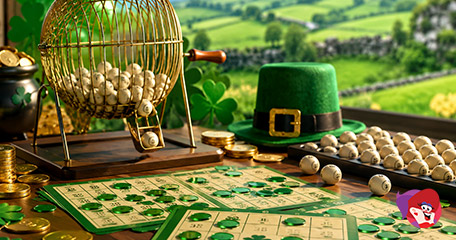
Irish bingo has developed into one of the most recognisable regional versions of the classic number-based game, combining traditional community play with modern online formats. While many bingo variants follow similar mechanics, Irish bingo carries its own atmosphere, customs, and gameplay style that continue to attract players both in local halls and on digital platforms.
The game has long been associated with Irish social life, especially through fundraising nights held in parish halls, pubs, and community centres. Over time, online operators also adopted Irish bingo formats, bringing 75-ball and 90-ball games to a wider audience while keeping some of the game’s social elements intact through chat rooms and interactive features.
According to Paul Cullen, an iGaming consultant and former executive at PartyGaming, Casumo, 32Red, and Intertops, the appeal of Irish bingo comes from its pace and atmosphere.
“Irish Bingo is a thrilling variant of a classic game,” Cullen told European Gaming.
“It’s simple, it’s exciting, it’s lightning-fast, and it’s bags of fun. Only in Ireland can bingo be good for your health. The thrill of being the last player standing, praying that your number won’t be the next one called, is what Irish Bingo is all about.”
Traditional Irish Bingo Has a Different Objective
Irish bingo rules change depending on the version being played, although the basic concept remains tied to matching numbers drawn at random with those appearing on a player’s card.
One of the best-known forms is traditional Irish stand-up bingo. In this variation, all participants begin the game standing. When a called number appears on a player’s card, they sit down. The final person left standing wins the game, although some formats reward the last few remaining players.
This approach changes the pace and objective compared to standard bingo formats, where players usually aim to complete a line or full house first.
“ If you’ve never played Irish Bingo, be sure to ask the caller for a game at your next bingo night. It’s a party, not a quiet night of dabbing numbers and telling the table next door to be quiet,” Cullen added.
Online and organised bingo halls more commonly feature 75-ball or 90-ball formats, where players purchase one or more cards and follow the draw until they complete a specific winning pattern.
The general process remains simple. Players buy cards, follow the caller or automated number generator, mark matching numbers, and monitor the winning condition for the session. Online bingo platforms often include auto-daubing tools that automatically mark numbers on digital cards.
Irish bingo also remains known for its number calls, many of which use rhymes or nicknames to help players recognise numbers quickly in busy halls. Common examples include “Kelly’s Eye” for number one, “Two Little Ducks” for twenty-two, and “Clickety Click” for sixty-six.
Community Roots Still Shape the Game
Bingo traces its origins back to Italy during the 15th century before spreading across Europe. The game became firmly established in Ireland during the 1960s, particularly after churches and local organisations began using bingo nights as fundraising events.
Community halls and parish venues soon turned bingo into a regular social activity throughout towns and villages across the country. Organisations including Gael Linn also used bingo events to support Irish language and cultural initiatives.
Cullen explained that the game continues to hold a unique place in Irish communities.
“The roots of bingo run deep in Ireland. The game has a huge following on the Emerald Isle. The craic is first-class and it comes with the blessing of the Church. Ever since the Catholic Church promoted bingo as a fundraising activity, raising money for parish needs and charitable causes, the game has enjoyed an important place in the community.”
He also noted that while bingo participation declined in parts of England over the years, Irish bingo has maintained strong popularity.
Compared to traditional casino bingo, Irish bingo is generally viewed as more community-focused and relaxed. Local venues often emphasise conversation and social interaction alongside gameplay, while casino-style bingo environments usually move at a faster pace and focus more heavily on larger prize pools.
Online Bingo Expands the Audience
The shift toward digital gambling platforms has helped Irish bingo reach players outside Ireland while introducing additional features unavailable in traditional halls.
Online operators now offer multiple game variations, chat systems, jackpots, and promotional offers, allowing players to participate remotely through mobile devices or desktop platforms.
The move online also increased accessibility for beginners, particularly through automated features that reduce the pressure of managing multiple cards during faster games.
Cullen said players should still approach online bingo sites carefully and focus on established operators with proper licensing and security protections.
“All the usual online gaming caveats always apply. It doesn’t matter if you’re playing Botswanan Bingo, Rwandan Roulette, or Belarusian Blackjack,” Cullen said.
He advised players to check whether sites are licensed by recognised regulators such as the UK Gambling Commission, Malta Gaming Authority, or Gibraltar Gambling Commission, while also looking for SSL encryption, established payment providers, and responsive customer support.
Industry observers expect Irish bingo to continue evolving through live-streamed rooms and interactive formats, although the core appeal of the game still centres around its social atmosphere and straightforward gameplay.
For beginners, Irish bingo remains one of the easier gambling games to learn. Players simply follow the numbers as they are called, while more experienced participants can manage additional cards or explore different formats over time.
Source:
“What Is Irish Bingo? A Comprehensive Guide”, europeangaming.eu, May 11, 2026
Your feedback
Please enter your comment.
Your comment is added.